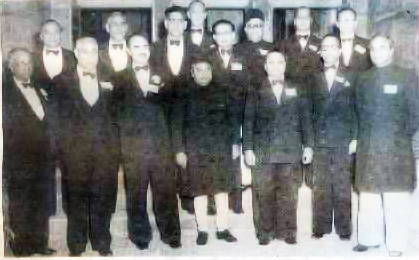
Governor General of Pakistan, Khawaja Nazimuddin with Karachi Rotarians,
March 1951
At the time of Pakistan’s independence in August 1947, there were only 3 Rotary clubs existing in what was to become Pakistan – a club in Lahore was founded on 7th December, 1927) the Karachi Rotary Club (RCK) pm 11th May, 1933 and a club in Hyderabad on 5th March 1939. Today the Rotary Club of Karachi (with a membership of around 250 members – highest in Pakistan), is the oldest of the 108 clubs in Rotary District 3271, which covers the provinces of Sindh and Balochistan in Pakistan.
The setting up of the Rotary Club of Karachi was the outcome of the vision and initiative of its service-minded charter members, amongst whom figured personalities like Hatim A. Alavi, Hatim B. Tyabji and Jamshed Nusserwanji. And when in 1947, at independence, the Club boat was being rocked with the migration of a good number of its members, the storm was weathered by the foresight and hard work of Rotarians like Dinshaw B. Avari, Hakim M. Ahson, Dr. Sohrab Anklesaria, Yussuff Chinoy and Ahmed E. H. Jaffer.
From its very commencement, the Club started taking an active interest in the civic life of Karachi and also devoted considerable attention to the international aspect of Rotary service.
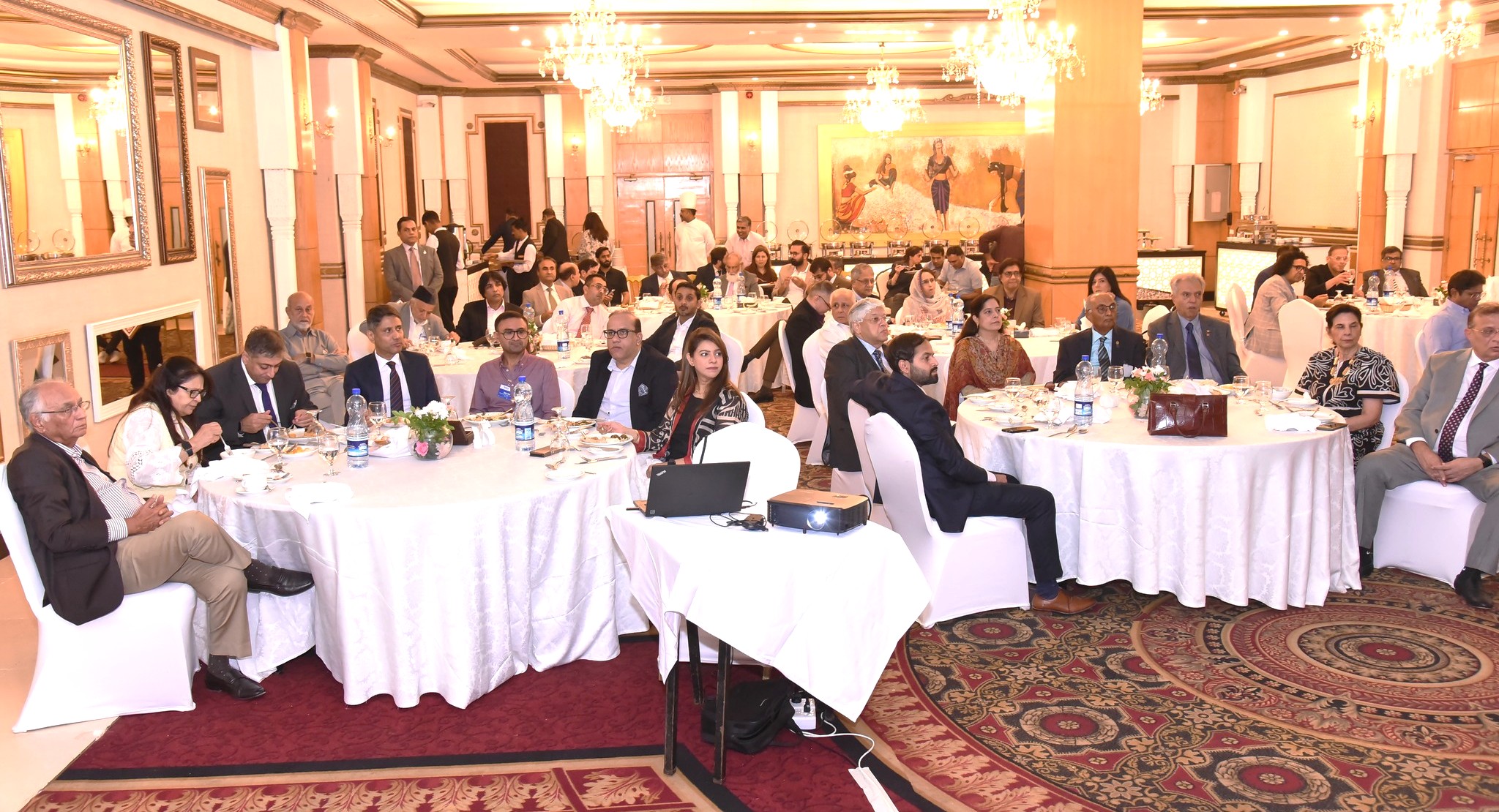
The Rotary Club of Karachi holds its weekly lunch meetings at the Pearl Continental Hotel, Karachi. On the last Tuesday of the month, a dinner meeting is held instead of a lunch meeting, at the same venue.
A renowned person, chosen from different fields is invited as the guest speaker at each meeting. A list of speakers during the current Rotary Year can be reviewed under the Lists tab in the navigation bar.
The weekly lunch meeting starts promptly at 1.00 pm and ends at 2.15 pm. The flow is strictly followed and is respected by the members present. The guest speaker is given a 20 minutes slot for giving a talk or presentation, which is previously decided and announced to the members a few days prior to each meeting. Following the speaker’s talk or presentation, a 10 minutes Q&A session is held, in which the members can ask questions related to the topic. As a policy the speaker is requested to avoid speaking about political or religious topics.
When Chicago Attorney Paul Harris formed the Rotary Club of Chicago on February 23, 1905, his vision was to gather professionals with diverse backgrounds, who could exchange ideas and form meaningful, lifelong friendships. Over time, Rotary’s reach and vision gradually extended to humanitarian service.
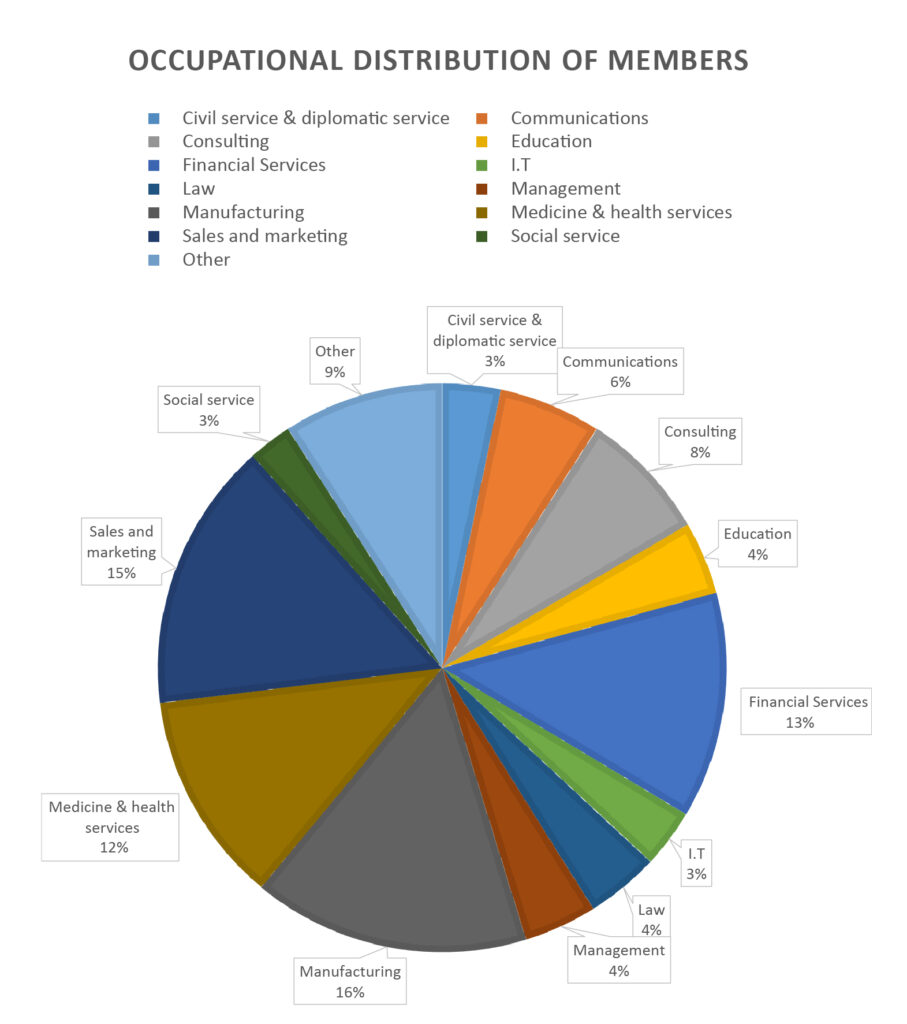
In this original spirit of Rotary, the members of the Rotary Club of Karachi also come from diverse professional backgrounds. This diversity adds enhanced creativity and innovation, improved problem-solving and decision-making, and a broader range of skills. This variety of perspectives helps the club better understand its community and tackle complex challenges.
Below we present an analysis of our members’ occupation or professional fields, categorized into 12 broad categories. And within some categories are sub-categories which can be classified within the broad main category. For example:
Communications category include advertising, public relations, journalists / media, telecommunications, production of communication & entertainment content.
Financial services include accountancy, actuarial services, asset management, auditing, banking, fintech, insurance, investment & wealth management, stock brokerage.
Others include various other categories in which there are 5 or less than 5 members in any one of the categories included in Others. These categories include architecture, interior design, construction & real estate, farming, flower decorations, printing, spouse members & warehousing.
The Club has the unique honour of having eight of its illustrious members elected as District Governors since the creation of Pakistan in 1947, namely:
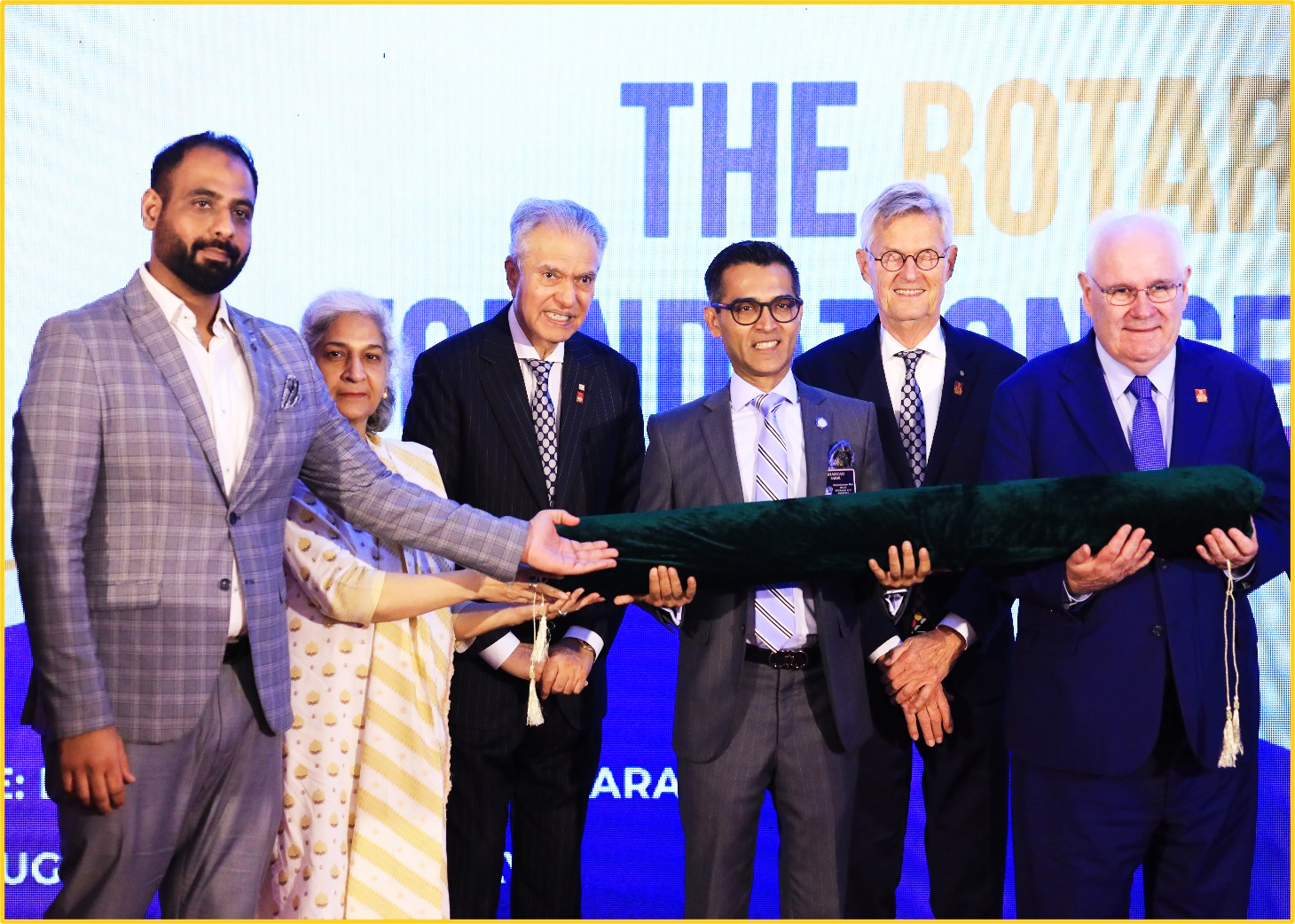
And now a 9th name will be added to this list soon, as Past President Shahzad Sabir is poised to take over as District Governor of District 3271 on the first of July, for the 2026-2027 term.
Till mid-2026, the Club has contributed over US$ 486,000.00 to The Rotary Foundation, which represents about 80 percent of the total contributions of all the Rotary Clubs of Pakistan and Afghanistan.
The Club has 109 Paul Harris Fellows, 67 Paul Harris Sustaining Members, 4 Benefactors and one Major Donor Level 2
In the late 1980’s, an amenity plot measuring about 1,700 square meters (about 2,000 square yards), was acquired in the Gulistan-e-Jauhar area of Karachi, to establish the RCK Community Centre, which was designed by architect/engineer Rotarian Abdul Razzak Kazi. Tree plantation was done early, with a view to create a green environment, even as the construction of the Centre’s buildings took place. And as soon as the first wing of the Centre’s building, comprising of 4 rooms was constructed, computer classes and health-related activities were started on regular basis for the deserving, with the Club’s Rotarian doctors volunteering their expertise and time.
Contributions to the cost of construction of the Centre in phases, came from various sources, including an early donation of PKR 1.0 million by PDG Kassim Dada. A large donation of US$ 15,000, with Rotary Club Seattle matching it with US# 10,000 and Jaipur India Rotarians also making a contribution, among others.
Today the Centre houses the Artificial Limbs Project workshop and clinic, and the Diabetes Advisory Centre, while also serving as the venue for different other club’s activities for the community, such as health camps, eye clinics, technical training sessions, et cetera.