As the Rotary year 2026–27 begins, we open with one of the most urgent and deeply human causes on our agenda, the health of mothers and their children. July is dedicated to Maternal and Child Health, a cause that extends far beyond healthcare. It speaks to the quality of life, the strength of communities, and the promise of future generations.
A key indicator of the state of the health of a country’s population, is maternal and child health. Each year about 5 million children under 5 years of age, die from preventable causes such as malnutrition and inadequate healthcare and sanitation. More than 80% of maternal deaths could be avoided by access to quality reproductive healthcare services, including accessible prenatal and postnatal care, skilled birth attendants, immunization, proper nutrition, clean water, sanitation, and health education.
In Pakistan‚ every day‚ 675 newborns and 27 mothers die from preventable complications. In total‚ there are over 9,800 mothers and 246‚300 newborns who die each year from complications‚ and most of these deaths can be avoided. While maternal mortality has fallen over the years, and immunisation and skilled birth attendance have both improved, yet deep disparities exist across regions and socio-economic groups.
Maternal and Child Health is a principal Focus Area of Rotary and its approach goes beyond aid. Through The Rotary Foundation’s Global Grants, clubs worldwide train community health workers, run mobile clinics, deliver immunisation programmes, distribute birthing kits, and promote maternal nutrition. Globally, these efforts have yielded real results: strengthening health systems across African nations, driving HPV vaccine inclusion into Sri Lanka’s national immunisation programme, delivering vaccines to over 100,000 children across remote Pacific Islands, and supporting obstetric fistula repair for vulnerable women in Nigeria.
These examples underscore an important principle: lasting progress is achieved when communities themselves are equipped with the knowledge, skills, and resources to improve their own health outcomes.
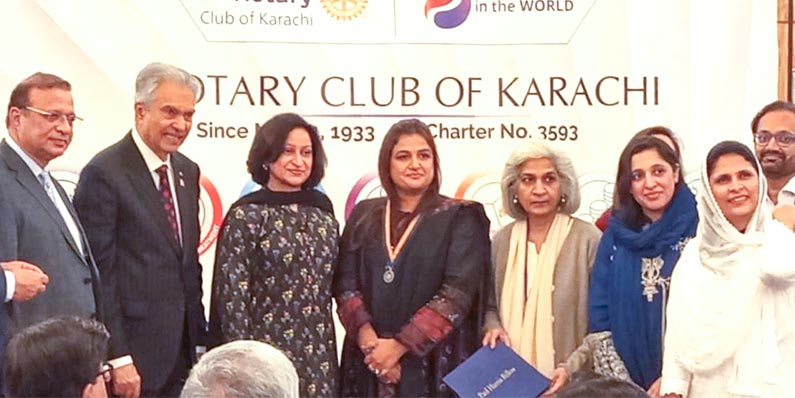
The Trust for Malnutrition and Stunted Growth (TMSG) was created through a partnership between Rotary Canada and Rotary Club of Karachi (RCK). AKU was the first to work with this Trust, for the rapid diagnosis and management of moderate to severe malnutrition of children and pregnant women in the community. Subsequently, the Chair of Paediatrics & Child Health at Aga Khan University, Dr Fyezah Jehan, received the prestigious Paul Harris Award at a ceremony in February 2024, for her work on malnutrition. The Rotary Club of Karachi, in collaboration with the Rotary Club of St. Catharines South and the Trust for Malnutrition and Stunted Growth, hosted the event to recognise her “outstanding service and dedication to the community”.
The work of Rotary has always begun in the community. As we enter this new Rotary year, July is our reminder that the most fundamental investment a society can make is in the health of its mothers and children.
A healthy beginning truly is a hopeful future.