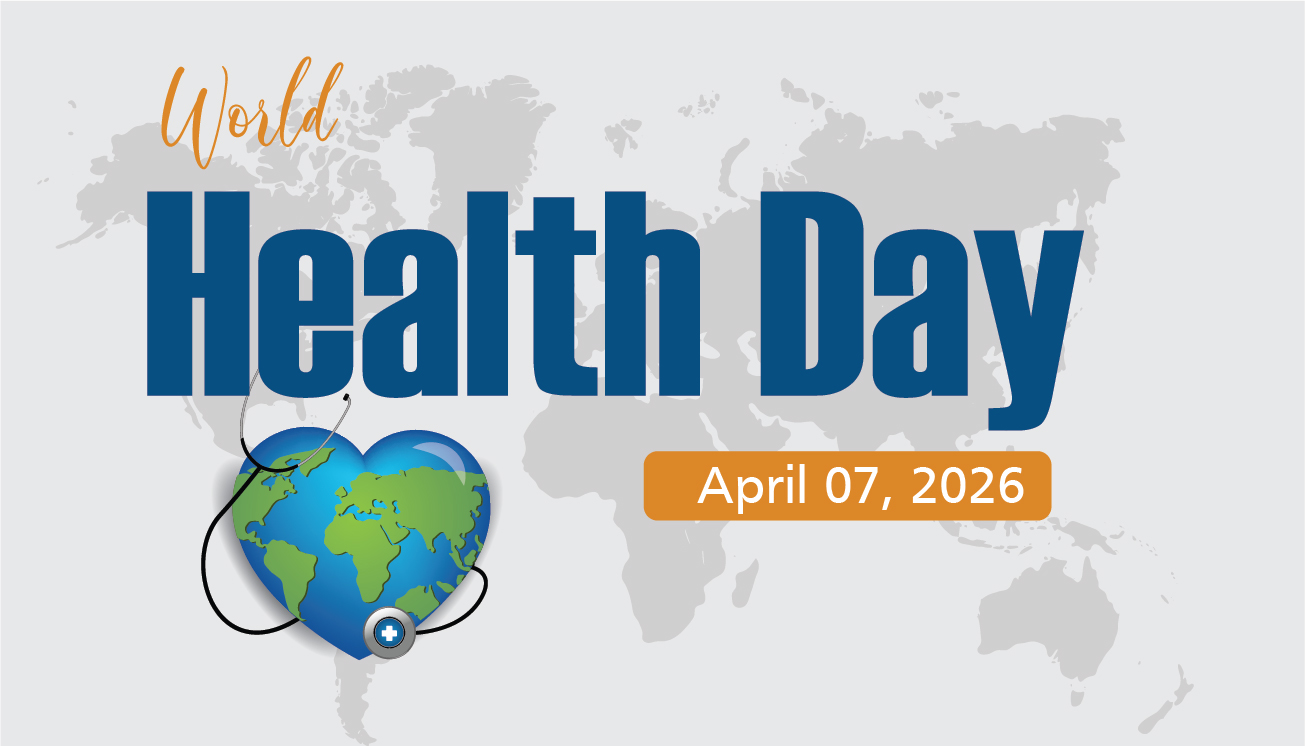
World Health Day is celebrated on the 7th of April every year since 1950, commemorating the date on which the World Health Organization (WHO) was established. This year’s theme “Together for health. Stand with science”, calls for a renewed trust in science‚ cross-sectoral research and science-based interventions. It is based on the One Health concept‚ which considers that humans are part of a dynamic ecosystem in which human health is interconnected with the health of animals‚ plants and the environment.
The theme is also closely aligned with UN’s Sustainable Development Goals (SDG), in particular SDG 3 (Good Health and Well-Being), SDG 1 (No Poverty), and SDG 10 (Reduced Inequalities). Evidence-based healthcare systems are vital to ensure that prevention‚ treatment, and care are accessible‚ effective, and sustainable.
The emphasis on “standing with science” is more urgent today than ever, where misinformation and fragmented systems continue to hinder the health system, like we witnessed in the Covid-19 pandemic with vaccine-deniers.
The health challenges are very complex and varied. They can be divided into three categories: communicable diseases‚ non-communicable diseases, and injuries. While infectious diseases such as tuberculosis and respiratory diseases kill millions of people per year worldwide‚ non-communicable diseases such as cardiovascular disease and diabetes are the leading causes of death globally. With 33 million adults with diabetes‚ Pakistan is among the countries with the highest rate of diabetes in the world, while cardiovascular diseases account for up to 30 to 40 percent of deaths.
Such patterns highlight the need for science-led prevention and early detection and for integrated health systems capable of addressing shifting threats.
This year‚ the theme is more relevant than ever for Pakistan, where there is the substantial burden of communicable and non-communicable diseases, along with the challenges of maternal and child health‚ and also the neglected area of mental health, with almost 50 million affected and millions needing specific psychiatric care.
Regarding maternal and child health, an estimated 675 newborns and 27 women die daily from mostly preventable causes. Malnutrition and socio-economic factors account for almost 40% of children under 5 years old experience stunting. This signifies the need for standing with science as the basis for making policies‚ planning‚ and providing services.
Rotary International plays a very important role in the advancement of health equity. Interestingly, 3 of Rotary’s 7 focus areas – maternal health and child health, disease prevention, and water and sanitation, are directly integrated with global health concerns. Rotary believes that basic healthcare is a fundamental human right. Building on its pioneering role in the eradication of polio, Rotary is a global supporter of science-driven, community-based programmes which improve access, enhance healthcare systems, and encourage prevention through long-term partnerships and local involvement.
The Rotary Club of Karachi (RCK) too, has been deeply involved for a long time now, in several healthcare programmes and initiatives. Among others, these include, support to the End Polio Now campaign, Breast Cancer Awareness campaign, ongoing free dialysis project, ongoing free provision of artificial limbs project, blood donation drives, support to Civil Hospital and the Ojha TB Sanatorium for tuberculosis detection, free eye camps, provision of large number of water filtration plants to provide clean drinking water to marginalized communities to fight against water-borne diseases, diabetes consultation at the Rotary Community Centre, and provision of free medicinal supplies worth millions of rupees to 21 hospitals and orphanages.
This year, let us all remind each other that health is not isolated; it is the outcome of shared responsibilities and informed decisions. Knowledge is the key to a healthier lifestyle, so it is necessary to support science by adhering to evidence.