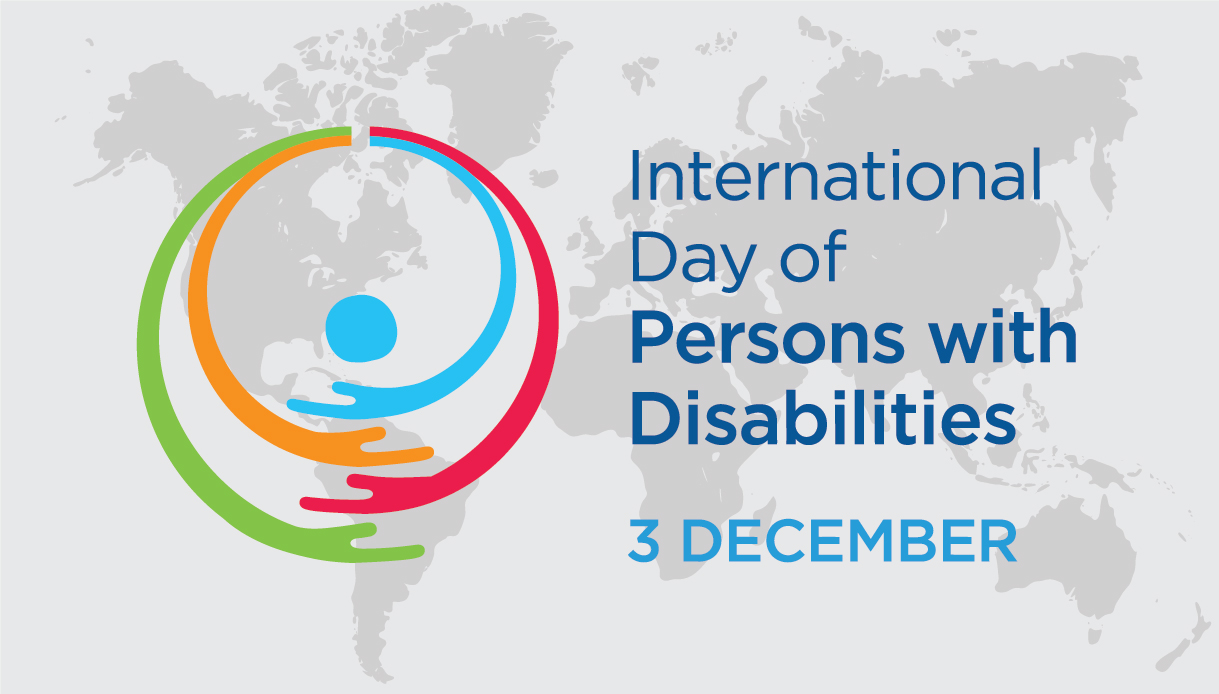
The 3rd of December is observed as the International Day of Persons with Disabilities (IDPD), first proclaimed in 1992, through a UN General Assembly Resolution. What began as the conclusion of the UN Decade of Disabled Persons (1983–1992), has since evolved into a global platform for advancing the dignity, rights, and well-being of persons with disabilities. across every sphere of political, social, economic, and cultural life.
A disability may involve physical, sensory, cognitive, intellectual, or mental impairments, or chronic health conditions that significantly limit a person’s functioning compared to societal norms. However, as reflected in the UN Convention on the Rights of Persons with Disabilities (CRPD), adopted in 2006, CRPD, emphasizes that disability does not reside in the individual alone. It emerges through inaccessible environments, discriminatory legislation, entrenched stigma, and a lack of supportive services that together restrict participation and opportunity.
Persons with disabilities continue to face disproportionate challenges such as lower educational achievement, fewer economic opportunities, and higher poverty rates. They also continue to die younger, experience poorer health, and face barriers across the entire health system, as per the 2022 WHO Global Report on Health Equity for Persons with Disabilities.
WHO data also shows that children with disabilities are nearly four times more likely to face violence; adults with disabilities are 1.5 times more likely, and adults with mental health conditions face almost four times the risk.
Over 1.3 billion people, or about 16% of humanity, lives with some form of disability. More than 100 million are children. In Pakistan, estimates of persons with disabilities range from 3.3 million to 27 million, reflecting gaps in data collection. Challenges of mobility, access, education, and employment remain widespread, reinforcing cycles of marginalization.
Rotary International has a long-standing history of advancing dignity, empowerment, and equal participation; values that align deeply with the spirit of IDPD. Through education, health initiatives, community service, and grassroots mobilization, Rotary continues to advocate for societies where every individual, regardless of ability can contribute meaningfully.
Disability inclusion is a year-round commitment for the Rotary Club of Karachi, which runs an Artificial Limbs Center established in June 2008, in collaboration with Jaipur Foot India and the local nonprofit organization, HASWA. The Centre is dedicated to restoring mobility and dignity for underserved communities. Over the past 17 years, it has provided more than 35,000 artificial limbs free of charge to patients across Pakistan.
The Center uses 2 technologies. One, a rigid design preferred by rural patients, especially farmers, as it allows them to walk barefoot in fields, developed by Jaipur Foot, India. And the second is modular limbs, which is lightweight and adaptable, offering flexibility for urban patients with varied lifestyles.
The work of the Center restores mobility, independence, and dignity to those who would otherwise remain marginalized.
The 2025 theme, “Advancing Access and Empowerment for People of All Abilities,” calls on societies to remove barriers, expand opportunities, and ensure people with disabilities are fully empowered to participate, lead, and thrive.
Fully in line with this theme, RCK recently concluded a MoU with the Sindh Microfinance Bank Limited, under which loans will be provided to interested and eligible beneficiaries of the ALP, to set up simple self-managed businesses. Thus by providing livelihood earning opportunities to people who were so far marginalized and dependent on others, this initiative of RCK and its ALP will seek to bring back these people into mainstream society.
The International Day of Persons with Disabilities reminds us that true inclusion goes beyond symbolic gestures, it demands commitment, policy reform, community awareness, and empathy.