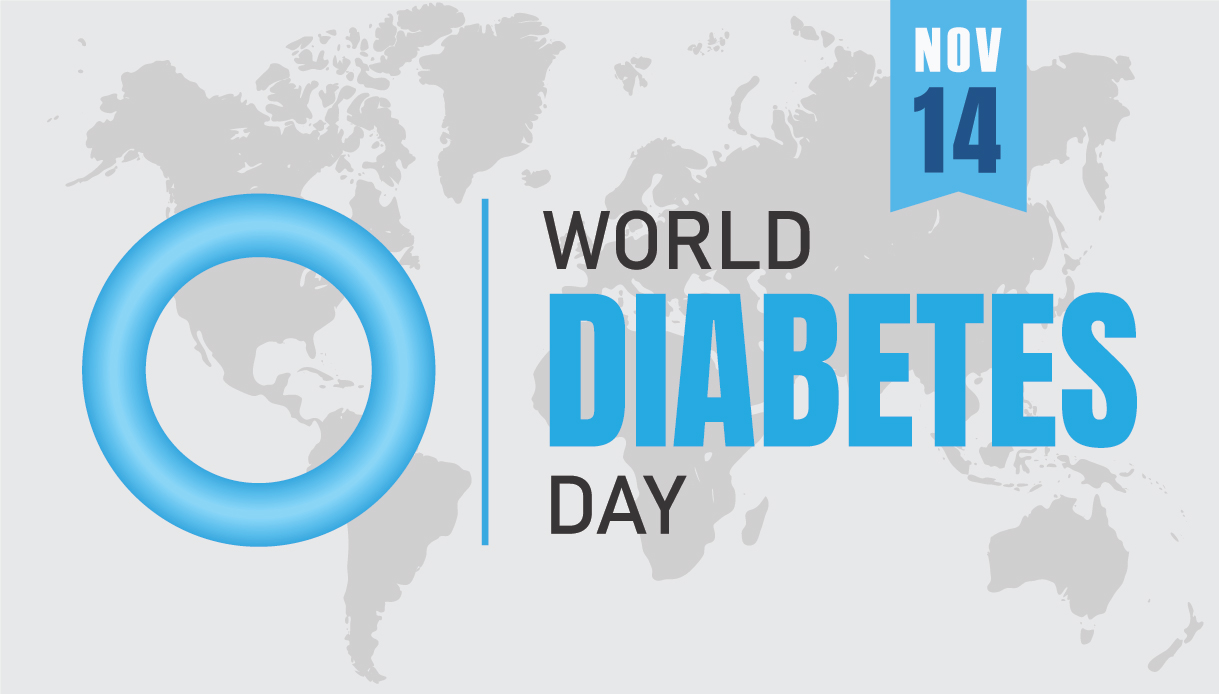
Every year on 14th November, the world observes World Diabetes Day (WDD), uniting over one billion people across 160 countries to raise awareness about one of the most pervasive health challenges of our time. Established in 1991 by the International Diabetes Federation (IDF) with support from the World Health Organization (WHO) and later recognized by the United Nations in 2006, this global campaign commemorates the birthday of Sir Frederick Banting, who co-discovered insulin in 1922, alongside Charles Best; a discovery that continues to save millions of lives each year. This year’s theme, “Diabetes and Well-being,” focuses on supporting the physical, mental, and social health of people living with diabetes through inclusive, stigma-free environments.
Diabetes develops when the body produces insufficient insulin, or is unable to use it effectively, causing glucose to accumulate and damage organs and blood vessels over time. It includes Type 1 (autoimmune destruction of insulin-producing cells), Type 2 (insulin resistance or inadequate production), and Gestational diabetes (occurring during pregnancy with risks to both mother and child). Symptoms like excessive thirst, frequent urination, fatigue, blurred vision, and slow healing are often overlooked, allowing the disease to progress silently. Yet with early diagnosis and proper management, most complications can be prevented.
The global scale of diabetes is staggering. The IDF Diabetes Atlas 2024 reports that 589 million adults (20–79) are currently living with diabetes, a number expected to reach 853 million by 2050, nearly doubling within 30 years. Alarmingly, 43% remain undiagnosed, often discovering their condition only after serious complications emerge. In 2024 alone, over 3.4 million deaths were linked to diabetes, while annual global spending has surpassed USD 1 trillion.
Closer to home, the situation in our country is even more alarming. Pakistan now ranks first globally in diabetes prevalence, with an age-standardized rate of 31.4% among adults aged 20 to 79. According to IDF estimates, 34.5 million Pakistanis are currently living with diabetes, a number projected to double to 70 million by 2050, surpassing even the United States. Each year, approximately 230,000 deaths in Pakistan are linked to diabetes and its complications. Equally concerning is that over 9 million adults remain
undiagnosed, placing them at grave risk of preventable disabilities such as blindness, kidney failure, and limb amputations.
Just as Rotary International has played a historic role in eradicating polio, it is now at the forefront of addressing diabetes through the Rotary Action Group for Diabetes (RAGD). The RAGD serves as a global platform that mobilizes Rotarians across 160 countries to combat diabetes through five focus areas that are awareness, prevention, treatment, management, and complication control.
At the Rotary Club of Karachi Artificial Limbs Centre, many amputees are underprivileged diabetic patients unaware of the risks of untreated diabetes. To address this, RCK, in partnership with MMI Hospital and HASWA, established a Diabetes Clinic in December 2024, offering free consultations, medicines, and lab tests, with specialist referrals when needed. Staffed by a full-time trained doctor, it has already served over 1,500 patients, advancing Rotary’s mission from rehabilitation to prevention through awareness, timely intervention, and compassionate service.
Pakistan now ranks first globally in diabetes prevalence, with an age-standardized rate of 31.4% among adults aged 20 to 79. According to IDF estimates, 34.5 million Pakistanis are currently living with diabetes, a number projected to double to 70 million by 2050, surpassing even the United States.
The fight against diabetes requires collective action. With its global network, Rotary is equipped to transform awareness into access and impact. On World Diabetes Day 2025, we reaffirm our commitment to prevention, early detection, and compassionate care for all.