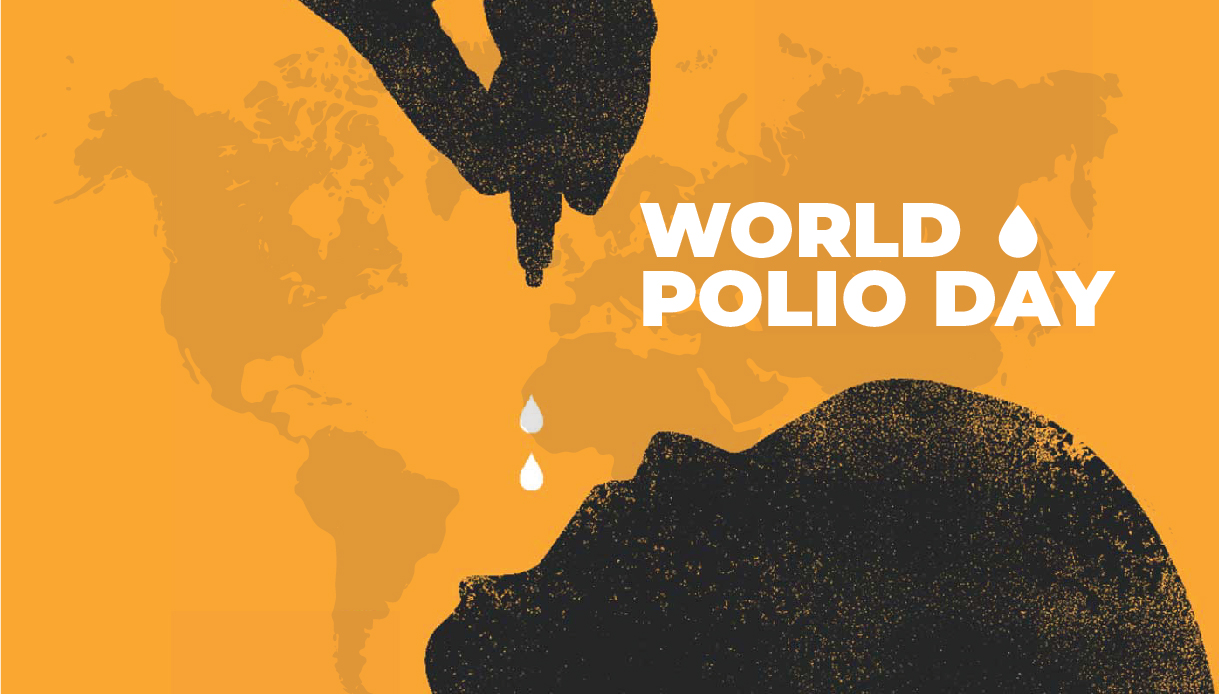
Every month Karachi Rotarian will feature an International Day of the month which is starting. A Day which is relevant to Rotary.
This month we are featuring the World Polio Day, perhaps the most relevant International Day for Rotary in the whole year. Read on to know why.
“The final push is the hardest, but now is the time to act. We cannot rest until every child, in every corner of the world, is safe from polio – once and for all.”
UNICEF Executive Director Catherine Russell.
Did you know the World Polio Day, observed every year on October 24, was established by Rotary International?
Yes indeed! It was first observed by Rotary International on October 24, 1985, to commemorate the birthday of Dr. Jonas Salk, who in 1955 developed the first effective polio vaccine. His work changed the course of global health, transforming polio from a dreaded killer into a disease on the brink of eradication.
Polio, or poliomyelitis, is a life-threatening, disabling disease caused by the poliovirus. For much of the 20th century, it paralyzed or killed hundreds of thousands of children every year. In 1988, the Global Polio Eradication Initiative (GPEI) was launched by the World Health Assembly, with Rotary as a founding partner alongside WHO, UNICEF, the U.S. CDC, and later the Bill & Melinda Gates Foundation. At that time, polio was endemic in 125 countries, with more than 350,000 new cases annually.
Since the effort was launched, polio cases have declined by 99.9%, preventing an estimated 20 million children from paralysis and saving more than 1.5 million lives. The Americas were declared polio-free in 1994, the Western Pacific in 2000, Europe in 2002, South-East Asia (including India) in 2014, and Africa in 2020. Today, polio remains endemic in only two countries: Afghanistan and Pakistan.
Rotary has been central to this fight for over 35 years. In 1985, long before global health agencies recognized polio eradication as possible, Rotary launched its PolioPlus programme; the first and largest internationally coordinated private-sector support initiative for a public health goal. Rotary has since contributed more than US$2.1 billion, mobilized over 1 million volunteers, and vaccinated nearly 3 billion children across 122 countries.
Rotary’s advocacy has also persuaded governments to commit more than US$10 billion to polio eradication.
In 1985, long before global health agencies recognized polio eradication as possible, Rotary launched its PolioPlus programme; the first and largest internationally coordinated private-sector support initiative for a public health goal. Rotary has since contributed more than US$2.1 billion, mobilized over 1 million volunteers, and vaccinated nearly 3 billion children across 122 countries.
Rotary’s “End Polio Now” campaign has brought global visibility to the cause, ensuring that polio remains a priority even amid competing crises. For Rotarians worldwide, this is not simply another programme; it is Rotary’s gift to humanity.
That gift is not yet complete, and Pakistan holds a central role in this unfinished journey. Despite significant progress, Pakistan continues to report wild poliovirus cases, with 74 cases recorded in 2024, primarily in high-risk districts of Sindh, Balochistan, and Khyber Pakhtunkhwa. Karachi remains a critical battleground due to population density, migration, and resistance fueled by misinformation. Meanwhile KPK province continues to report the most cases every year, owing to parents’ refusal to have their children vaccinated, wrongly believing that polio vaccine causes infertility.
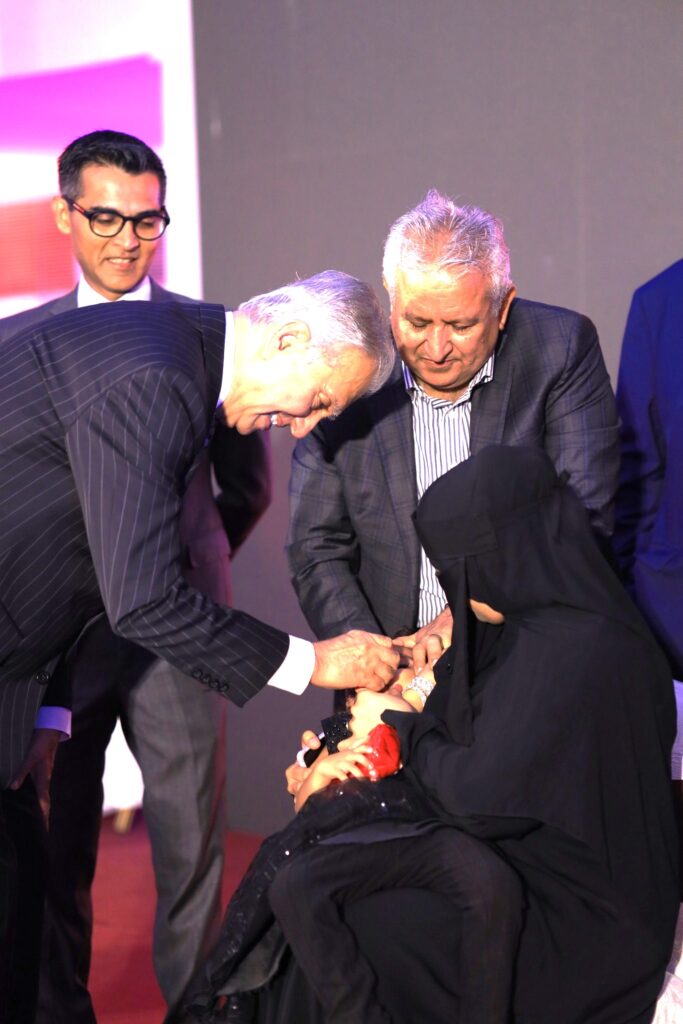
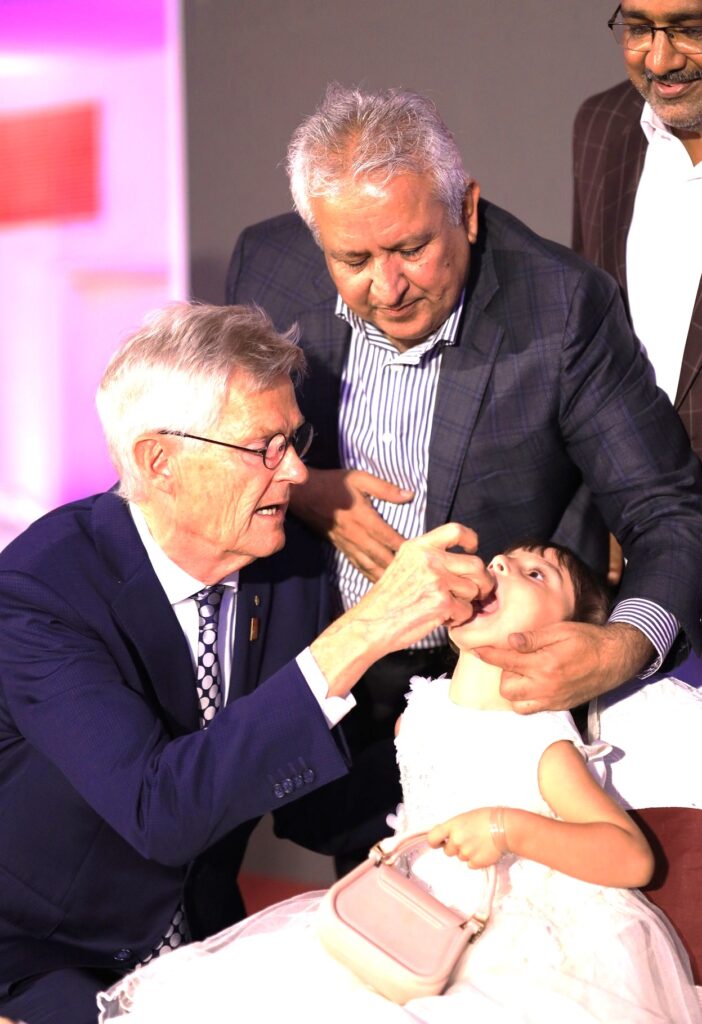
The Pakistan Polio Eradication Programme, supported by Rotary and GPEI partners, is one of the most extensive public health campaigns in the world. More than 339,000 health workers, many of them women, go door-to-door across Pakistan to ensure that every child under five is immunized. But conflict,
misinformation, and migration patterns have posed persistent obstacles. Yet, as the example of India (which achieved polio-free status in 2014 under similar socio-economic conditions) demonstrates, eradication is not only possible, but within reach. The solution lies in unyielding political will, community engagement, and the unwavering efforts of organizations like Rotary.
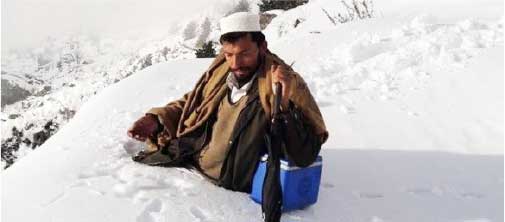
World Polio Day is also a call to honor the tireless vaccinators working in some of the most difficult conditions, several of whom have laid down their lives for the cause, as have many personnel of law-enforcement forces protecting them on duty.
The final steps are always the hardest, but history will remember those who refused to give up. Eradication will be a victory for humanity; proof that collective action, global solidarity, and the simple act of caring for children can change the course of history. And as Rotarians, we take pride in knowing that polio eradication is Rotary’s gift to the world, and it is within our grasp to make it permanent.